Introduction to Microscopy.
Microscopy is a fundamental scientific technique that allows researchers, clinicians, and engineers to observe structures invisible to the naked eye. From biological cells and microorganisms to nanomaterials and industrial samples, microscopy plays a crucial role in research, diagnostics, quality control, and innovation..

Types of Microscopy Techniques
Some of the latest projects we had the pleasure to work on
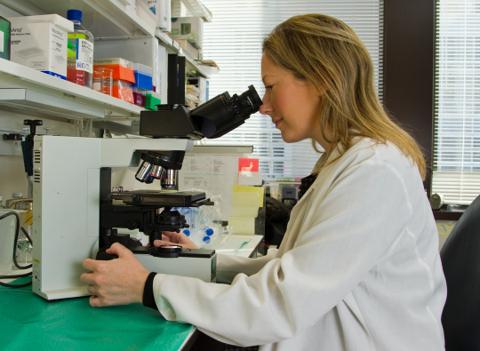
Optical (Light) Microscopy
Optical microscopy uses visible light and lenses to magnify samples. It is commonly used in teaching, routine laboratory analysis, and clinical diagnostics.
Bright-field microscopy
Phase-contrast microscopy
Fluorescence microscopy
Confocal microscopy
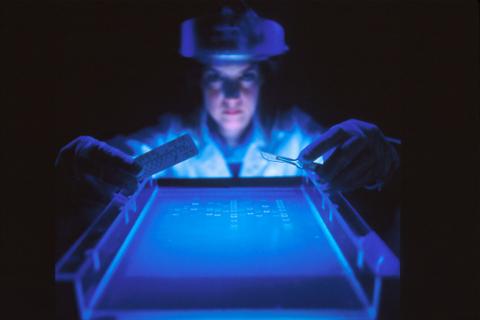
Electron Microscopy (EM)
Electron microscopy uses electron beams instead of light, providing ultra-high resolution.
Transmission Electron Microscopy (TEM)
Scanning Electron Microscopy (SEM) Applications include ultrastructural analysis, virology, materials science, and nanotechnology.
Scanning Probe Microscopy
This advanced technique analyzes surfaces at the atomic or molecular scale.
Atomic Force Microscopy (AFM)
Scanning Tunneling Microscopy (STM) Ideal for nanoscience, surface chemistry, and semiconductor research.
Biomedical Research:
Cell biology, histology, pathology, and reproductive biology
Clinical Diagnostics:
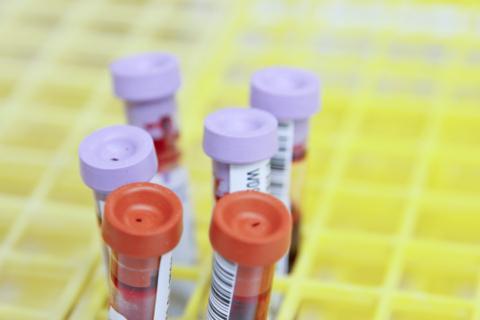
Hematology, microbiology, cytology, and pathology
Materials Science:
Polymers, metals, ceramics, and nanomaterials
Biotechnology & Pharmaceuticals: Drug development, quality control, and validation
Environmental & Food Analysis: Microorganism detection and contamination control

Importance of Microscopy in Modern Science
Microscopy is essential for understanding structure–function relationships at the cellular and molecular levels. It supports innovation in medical diagnostics, personalized medicine, assisted reproductive technologies, and advanced manufacturing.
Choosing the Right Microscope
Selecting a microscope depends on:
Sample type (biological, material, liquid, solid)

Imaging technique (live-cell, fluorescence, ultrastructure)

Required resolution and magnification