Microscopy is a cornerstone of scientific research, industrial inspection, and educational exploration. Among the many types of microscopes, stereo microscopes also known as dissecting microscopes stand out for their versatility, ease of use, and ability to provide a 3D view of specimens. In this guide, we’ll dive deep into the world of stereo microscopes, their applications, types, features, and tips for choosing the perfect model.
What is a Stereo Microscope?
A stereo microscope is an optical microscope designed to provide a three dimensional view of the specimen. Unlike traditional compound microscopes, which are ideal for viewing thin slices of samples at high magnifications, stereo microscopes offer low to medium magnification (typically 7× 90×) and are perfect for observing the surface details of larger objects. Read more
Stereo microscopes use two separate optical paths, one for each eye, which gives the perception of depth. This makes them particularly useful for tasks requiring precision and manipulation, such as dissection, assembly, or quality control.
Key features of a stereo microscope:
3D visualization of objects
Low to medium magnification (usually 7× 90×, sometimes up to 400×)
Wide working distance, allowing space for manipulation of the sample
Binocular or trinocular viewing options
Optional camera integration for digital imaging
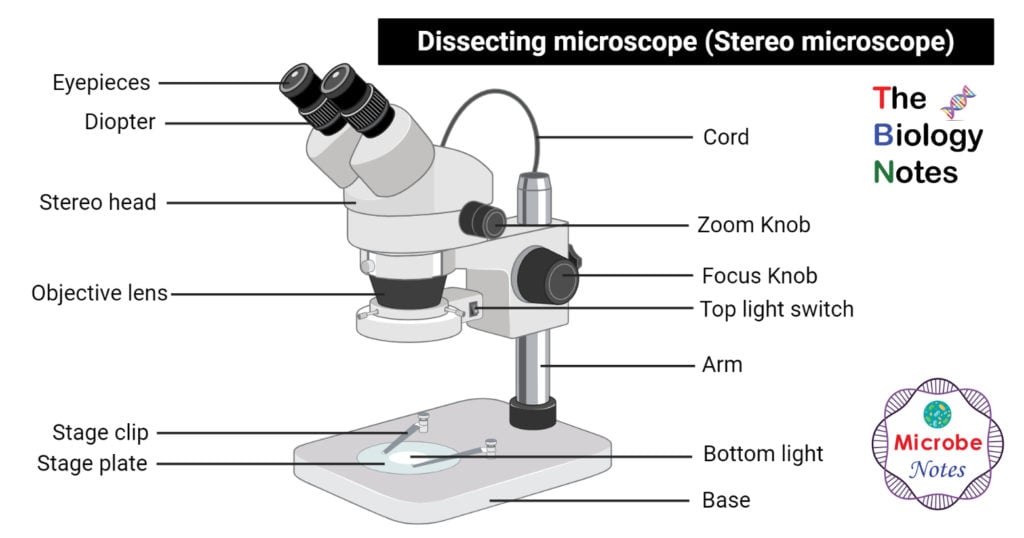
How Does a Stereo Microscope Work?
Stereo microscopes work using two separate optical paths, which project slightly different images to each eye. This creates a stereoscopic effect that allows you to perceive depth and dimension. Read more
The typical components include:
Eyepieces (ocular lenses): Usually wide-angle lenses, often 10× or 12.5×.
Objectives: Provide the primary magnification; can be fixed or zoomable.
Illumination system:
Reflected light (from above) for opaque specimens
Transmitted light (from below) for transparent specimens
Focus mechanism: Coarse and sometimes fine adjustments to focus precisely.
This combination allows for a detailed 3D observation, which is impossible with a simple compound microscope.
Types of Stereo Microscopes
When choosing a stereo microscope, it’s important to know the different types available:
Crafting Beautiful Spaces
Designing elegant, inviting environments that inspire and delight.
Standard Stereo Microscope
Offers basic 3D imaging
Low to medium magnification
Suitable for educational use, hobbyists, and simple inspections
Zoom Stereo Microscope
Magnification is adjustable continuously (7× 45×)
Perfect for laboratories, industrial inspection, and research
Often includes trinocular ports for camera integration
Digital Stereo Microscope
Integrates a camera for live viewing on a monitor
Ideal for teaching, documentation, or digital imaging
Some models offer 4K resolution for ultra-clear imaging
Rocker Arm or Industrial Stereo Microscopes
Designed for precision work in electronics, watchmaking, and industrial QC
Features reinforced pillars and ergonomic design
Can include advanced optics and LED illumination
Applications of Stereo Microscopes
Stereo microscopes are extremely versatile and find applications in a wide range of fields:
Biology & Education: Dissection of specimens, studying insects, plants, and tissues
Medical & Laboratory: Sample inspection, minor surgical assistance, and quality checks
Industrial & Manufacturing: Inspecting circuit boards, small parts, jewelry, and electronics
Forensics: Examination of trace evidence, fibers, and fingerprints
Hobby & Crafts: Coin and stamp collection, model making, and engraving
With the ability to combine magnification with manipulation, stereo microscopes are indispensable in industries requiring precision and detail.

Features to Consider When Buying a Stereo Microscope
When selecting a stereo microscope, consider these key factors:
Magnification Range : Choose according to your application; most lab work requires 7×–45×, while detailed inspection may need higher magnification.
Optical Quality : Look for fully coated lenses for bright, sharp images.
Working Distance – Ensure there’s enough space to manipulate specimens under the lens.
Illumination Type : LED lighting is energy-efficient and provides bright, uniform illumination.
Ergonomics : Adjustable eyepieces and comfortable design reduce strain during long use.
Camera Integration : Trinocular microscopes allow adding a camera for imaging or video recording.
Conclusion
Stereo microscopes are a perfect combination of versatility, precision, and 3D visualization. Whether you are a student, a scientist, or an industrial professional, choosing the right stereo microscope can greatly enhance your work. By understanding their features, types, and applications, you can make an informed decision that fits your needs.
For more information, check our Stereo Microscope Collection for models suitable for education, industry, and research.
Discover more
Designing elegant, inviting environments that inspire and delight.